

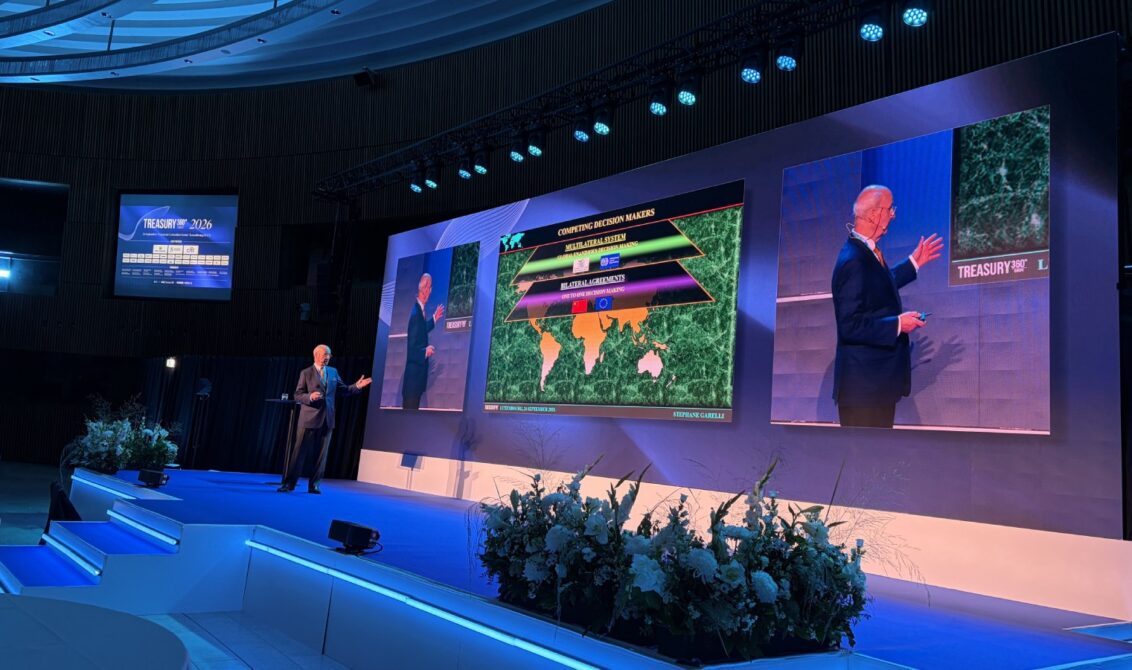
According to Garelli, it is the proliferation of these rules that is hindering the proper functioning of the world economy, and, as a result, market access. He used the tariffs imposed by the US on the rest of the world as an example. Most of the components within the iPhone 7G originate from China, while only 5% originate from the US. Estimates have shown that if all the components were to be made in the US, each phone will have to sell for US$3,500. “Everyone is benefitting from the fact that the economy is global,” Garelli points out. “Tariffs will not help that, so the rationale behind it is not very clear.”
What is clear, however, is that the US is dominating the world economy. Looking at the 20 largest companies in terms of market capitalisation, 16 of them hail from the US. “There is not a single company (on the list) from Europe,” says Garellis. The attractiveness of the US market is hard to deny – even for European companies. “Many of the large European companies today prefer to invest in the US rather than Europe.”
A second contender
It’s not just the US that is presenting Europe with strong competition. Today, China’s electricity production is 2.5 times that of the US, and four times that of the EU. Their dominance can be witnessed in the electric vehicle market. Within just three years, the country has doubled its production of electric cars to 12 million. BYD employs 870,000 people, compared to Tesla’s 134,000, and has 120,000 employees in R&D alone. China is not just competing on pure scale – firms there are also showing remarkable agility. Xiaomi, for example, has transformed from a company making just mobile phones to also making electrical cars in just three years.
Garellis explains Europe’s sluggishness with a comparison. “In the US, you innovate, and then you regulate. In Europe, first we regulate, then we let the companies innovate – if they can.”
Survival can be predicted
For companies located in the EU caught in a three-way battle of geopolitics, regulations, and competition, he predicts three big areas of concern to look at – stability of supply, cost efficiency, and security of assets.
“The unthinkable is not the unpredictable,” he says encouragingly. “A collapse in the stock market is unpredictable but the moment it happens I know exactly what it will look like… It’s the same story with the domino effect of geopolitics – it will have a very logical sequence of events affecting supplies, commodity, cost of food, and, at the end of the day, interest rates.”
Speaker:
Stéphane Garelli, Professor Emeritus of World Competitiveness, Institute of Management Development, University of Lausanne
• News from Treasury 360° Europe 2026, are gathered here.
• And why not spread the posts in our LinkedIn flow? Sign up to follow if you haven’t already – and share this post!
• Find here the main conference website, with the agenda.
• Download the event magazine here .
• View sessions in full after the event on our video page.